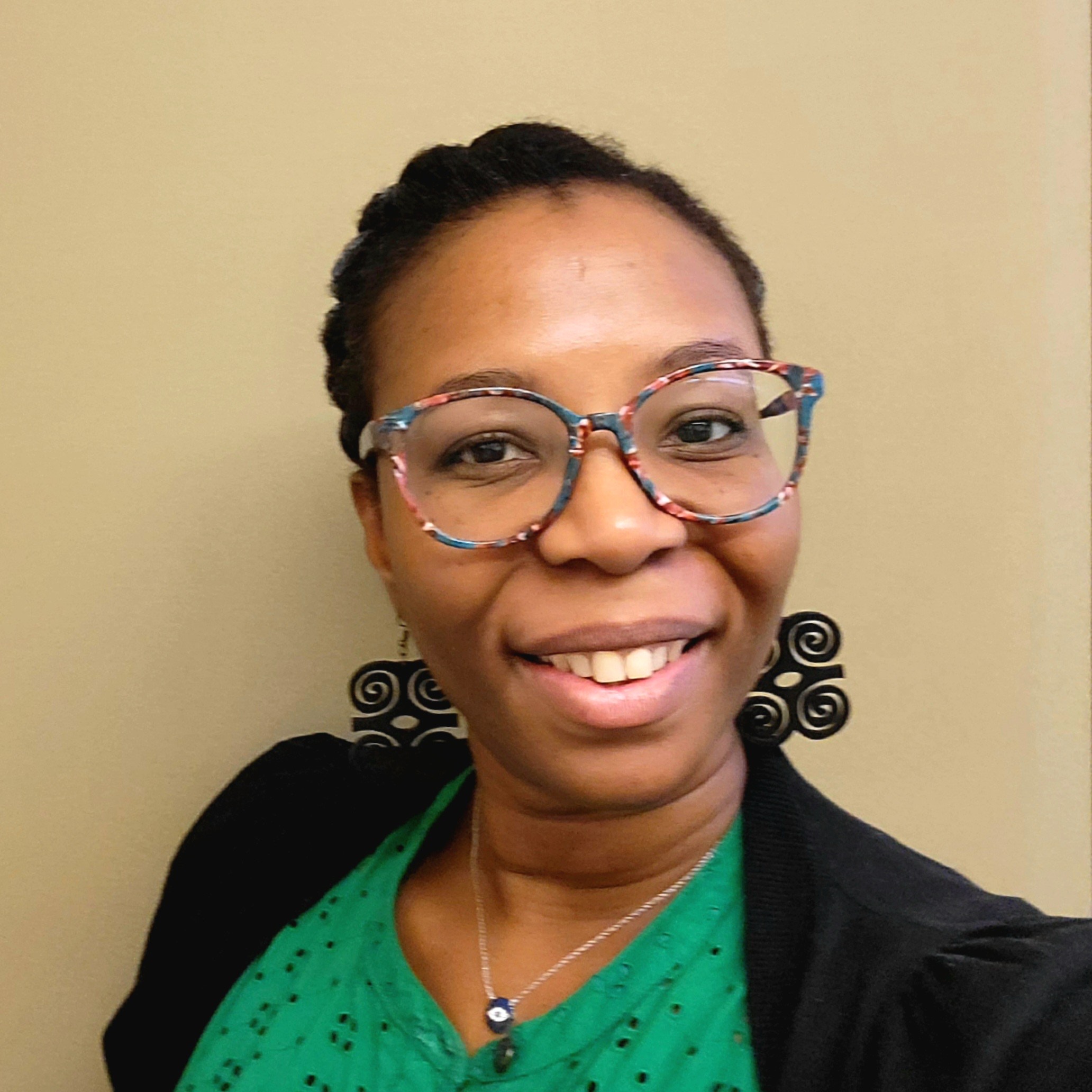
Assistant Professor & Medical Librarian for Electronic Resources
CUNY School of Medicine Medical Library, New York
“They’re treating people, not symptoms.”
Our latest interview features Nicole Williams, Associate Professor and Medical Librarian at The City University of New York (CUNY) School of Medicine. With a strong commitment to equity and access, Nicole prioritizes giving students, faculty, and staff the tools they need to navigate medical information effectively.
A champion of trauma-informed library services, Nicole takes a thoughtful approach to teaching and consultations, fostering inclusive, collaborative learning environments that support diverse student needs. From helping medical students refine research skills to assisting faculty with curriculum development, Nicole ensures the library is a vital resource. Learn more in this BMJ Insider interview.
BMJ: How long have you been at CUNY; what are your top priorities?
Nicole: I’ve been at the CUNY School of Medicine for 2.5 years but have been in the CUNY system since 2016 when I began working at CUNY Bronx Community College. My priorities are giving people the tools they need to achieve their goals and being a small part of their mission to improve the health outcomes of all people. Whether someone is working on a paper related to their clerkship or they’re trying to find an answer to settle a bet, I want the students, faculty, and staff that I’ve worked with to have a good grasp on how to understand and access information. I’m always happy to help, but I think that everyone should have a basic understanding of information, dis- and misinformation, and how to find things on the internet.
BMJ: Your LinkedIn profile mentions “providing trauma-informed library services”. Please describe this work.
Nicole: Thank you for asking. Working from a trauma-informed perspective means that I approach every situation assuming the best of those I’m interacting with; I make every effort not to presume the people I’m working with have prior knowledge of a topic or process, while respecting the life experience that every person brings to our interactions. I work to make my consultations and instruction sessions collaborative interactions, not one-way information-sharing. The library is not removed from our societal context and I try to treat everyone in such a way that working with me does not cause them to revisit previous negative life experiences, which could have come from factors including (but not limited to) mistreatment by authority figures, difficult family situations, demographic affiliations, country of origin, or socioeconomic status; it’s not necessary for me to know anyone’s past or story to do this.
BMJ: The CUNY School of Medicine promotes itself as the “most diverse and inclusive school in the country.” How does the medical library support this mission?
Nicole: We work closely with faculty to support their teaching and learning goals. We meet regularly with individual students, groups, and entire classes to demonstrate new and existing library resources, as well as to help them access the current and emerging medical literature that will help them provide the best possible care to their patients. Not all of our students come in familiar with library services or how librarians can support them as they learn, and we work closely with them to help them reach their goals of becoming physicians and physician assistants. We in the library collect materials and also host programs that highlight the research of our community members, which often examine the health concerns of groups who have historically been underrepresented by medical research and interventions.
BMJ: Please describe your interaction with the teaching faculty at CUNY. Do you assist them with curriculum design, supplementary materials, and/or actual medical student instruction?
Nicole: We work closely with course directors in the school to serve the needs of our undergraduate, MD, and PA students. We’ve collaborated on modules where students are required to consult with one of the school’s librarians at the beginning of their research process to ensure they develop research questions that they are able to find relevant literature on. Every undergraduate student has at least three sessions with us in their first semester, as we give them a general overview of the library, and then two targeted information literacy lessons that focus on using library resources in their general and medical studies. We teach several additional information literacy classes a semester and also host monthly online workshops on topics such as searching using MeSH terms (medical subject headings), using citation managers, and how to get the most out of specific databases.
BMJ: What are your responsibilities as an Associate Professor?
Nicole: As a CUNY faculty member, I have three primary responsibilities: teaching, service, and scholarship. I’ve mentioned the teaching that I do. In terms of service, I am a mentor in the Certificate in Open Librarianship program offered by the Open Education Network. I am the current president of the Library Association of the City University of New York and also serve on several college and CUNY-wide committees. In terms of my scholarship, I have written a book chapter on trauma-informed library service with a colleague and am in the midst of completing a few different articles.
BMJ: How do you support culturally relevant teaching and learning as an Assistant Professor?
Nicole: I often assist teaching faculty in locating medical and public health research relevant to our New York City location, to teach multicultural populations, or to Gen Z students, which comprise the majority of our student body. I led the Open Educational Resources initiative at my previous position, so I have experience finding, creating, or helping other faculty members adapt/create resources that help our students see themselves reflected in the material they learn from. Something as small as including the image of a subway performer balancing on a subway pole in my information literacy lesson can help students engage with the material that I’m teaching because that’s something they see in their regular lives. Additionally, some of our faculty members come to us directly from hospital roles and have never taught before, so I alm able to empathize with their transition into their new role and help them acclimate, as a person who worked in public libraries for a decade and never officially taught before coming to academia.
BMJ: How does the library introduce and promote library resources to new students?
Nicole: With the exception of a small number of books in the nearby Science and Engineering library, we are entirely virtual. We hold a “get to know the library” webinar once every couple of months, but there’s also a recorded version available on the library’s website. We are a part of orientation and teach two sessions for every U1 class and one for every new PA class during their first semester at the school. The way the school is currently set up, there is a three-year accelerated bachelor’s degree that segues directly into the graduate medical program, so there typically are not any new medical students; the scope of the school is expanding, and this will likely change in the future, and we expect that the library would be part of any orientation for new M1 students, too.
BMJ: What are the main factors you consider when deciding to add or remove a title to a collection?
Nicole: We try to think about the relevance to our program first when considering a title or ebook collection. It’s easy to purchase or retain titles that have an obvious connection to a specific module or topic that is taught at the school. It’s also worth it to consider whether a title is of general value to the medical community. The school’s mission includes a desire to train physicians who are comfortable treating New York City’s diverse population, because research has shown that those skills translate in any environment.
We keep an eye out for books that are focused on providing care to people of different racial, national, and ethnic backgrounds, as well as members of the LGBTQIA+ community. We are conscientious about adding general and medical humanities titles to our collection, to ensure that the medical professionals who graduate from our school keep sight of the humanity of the people they’re treating. When deciding whether to retain a physical title, we will often look at how old it is and whether it has been updated. Also, we are part of a university system, so even though we are the only medical school, sometimes other schools with allied health programs may have a copy of a book that we have. If so, out of consideration for the small amount of shelf space that we have, we might remove the title from our collection. We also try to get books that cover medical humanities, and not only explicitly medical books, because we want the physicians and PAs from our school to remember that they’re treating people, not symptoms.
BMJ: What sparked your interest in a library science career?
Nicole: I was a bookworm from toddlerhood and loved the library (I even went to the book club one town over because the kids at my home library weren’t as intense about books as I was), but it never occurred to me to be a librarian until I’d already finished undergrad and come home to an underwhelming job market. ALA had just put out a report that 50% of librarians would retire in the next decade (which was not true LOL), and I was like, “Sign me up.” The rest is history.
BMJ: What is the most rewarding aspect of your career?
Nicole: I am always glad to be able to help someone do something they previously didn’t know how to, but I especially appreciate hearing from those I’ve helped in the past about how they were able to successfully apply what we did together to their future work. I love seeing someone feel pride in themselves and their accomplishments. Life is hard and it feels great to be a part of people’s wins, whatever each particular win may entail. I also really enjoy when I get the opportunity to speak with librarians from other libraries; it’s great to hear what other people are doing and to get ideas I can bring back to my own library.
BMJ: What is the most challenging aspect of your career?
Nicole: Sometimes they make me do math, which feels like a tragedy for everyone involved.
BMJ: Anything else you’ve learned you’d like to share with your colleagues?
Nicole: Librarians are usually extremely generous people. If you have a question about something and you ask another librarian about it (like if you run across a super informative LibGuide), you have nothing to lose by sending a quick email. Introduce yourself, ask your question, and good things are likely to follow. I’ve met a lot of awesome, helpful people this way, and it reaffirms my gratefulness for being part of such a generous professional community.
Interviewed by Lauren Jones, Head of Marketing, BMJ Americas

